The Story of Planet Earth Poetry
30 years of serving the community through poetry

For more than thirty years, poets have been gathering in Victoria to read new work, hear one another, discover new voices, and be part of a community built around poetry.
Planet Earth Poetry began in 1995 in a small downtown café and has lived many lives since: through different names, different venues, different artistic directors, and even a pandemic. Along the way, it has welcomed some of Canada’s most celebrated poets alongside emerging writers, students, open-mic regulars, and people reading their work aloud for the very first time.
But PEP has always been more than a weekly reading. Over the years it has grown into a literary gathering place—offering workshops and retreats, anthologies and newsletters, collaborative projects, book launches, public events, and countless opportunities for writers to meet one another and find an audience.
The places have changed. The people at the helm have changed. The ways we gather have changed. What has remained remarkably constant is the spirit of the series: poetry shared aloud, a room open to new voices, and a community willing to keep showing up for one another.
This is the story of the people who carried Planet Earth Poetry from one generation to the next—and of the poets, volunteers, audiences and readers who made it theirs.

Wendy Morton, first Artistic Director of Planet Earth Poetry
Wendy Morton is the author of six books of poetry and a memoir entitled Six Impossible Things Before Breakfast, as well as being the first official Artistic Director of Planet Earth Poetry Reading Series—Wendy and Yvonne Blomer received permission from P.K. Page to name the series after her famous glosa, “Planet Earth.” Wendy worked extensively with Indigenous students on the Elder Project, and was a founder of Random Acts of Poetry. In 2019, The Capital Regional District designated the non-monetary position of Poet Laureate of Juan de Fuca to Wendy. Wendy is a recipient Order of B.C., 2010 Spirit Bear Award, an honorary citizen of Victoria, and the honourary ambassador for the Federation of B.C. Writers.
Wendy Morton at the Helm
Planet Earth Poetry’s story begins in 1995 at the Mocambo Café, a small downtown coffee house at 1028 Blanshard Street, now home to L’Apero Wine & Cheese Bistro. The Friday-night reading series was originally known as Mocambopo, and from the beginning its format was wonderfully simple: an open mic, a featured poet, and a room full of people who wanted to hear poems read aloud.
The earliest years passed through several hands. Our surviving history names Jim Andrews as the person who started the series, followed by Tanya Kern and Seth Gotro as hosts.
In 1999, Wendy Morton took the helm, and the series began to grow into something larger. Wendy brought poets to Victoria from across Canada, with support from the Canada Council for the Arts and the League of Canadian Poets, while continuing to make space for emerging writers and first-time readers at the open mic.
Those Friday nights became a meeting place for an unusually wide range of writers. Established poets shared the room with UVic students, spoken-word and performance poets, new writers, and people who simply loved poetry. Writers came over from Vancouver and arrived from farther afield; local poets returned week after week. The atmosphere was informal, lively and serious about the work all at once.
Wendy also dreamed up the first anthology connected to the series, Mocambo Nights: Poetry from the Mocambopo Poetry Reading Series, and invited Patrick Lane to edit it. Published by Ekstasis Editions, the book gathered work by poets who had read at the café—from P.K. Page, Lorna Crozier, Don McKay, Brian Brett and Tim Lilburn to emerging and lesser-known voices. Part of the proceeds was intended to support a prize for an emerging writer.
The anthology captured something that would remain at the heart of Planet Earth Poetry for decades to come: celebrated writers and brand-new voices sharing the same room, the same microphone, and the same audience.
The Artistic Directors and their Contributions

Yvonne Blomer, Artistic Director from 2009-2015
Yvonne Blomer’s first book, A Broken Mirror, Fallen Leaf, was shortlisted for the Gerald Lampert Memorial Award, and her poems have won and been shortlisted for many awards in Canada and the UK since. An excerpt of Death of Persephone won the Gwendolyn MacEwen poetry prize in 2021 with Exile Editions. The Last Show on Earth, her fourth book of poems, came out with Caitlin Press in 2022 and in the fall of 2022 Palimpsest Press released Book of Places: 10th Anniversary Edition. Yvonne’s other poetry books include As if a Raven (Palimpsest Press, 2015), and the anthologies Hologram: Homage to P.K. Page, Refugium: Poems for the Pacific and Sweet Water: Poems for the Watersheds (Caitlin Press). Sugar Ride: Cycling from Hanoi to Kuala Lumpur (Palimpsest Press, 2017) is her memoir exploring body, time, and travel. Yvonne is a past poet laureate of Victoria, BC, and the past Artistic Director of the weekly reading series Planet Earth Poetry. She was poet-in-residence with Arc Poetry Magazine and currently teaches poetry online to incredible students from across North America. She lives on the traditional territories of the Lək̓ʷəŋən (Lekwungen) people. More about Yvonne HERE
Yvonne Blomer at the Helm
By the time Yvonne Blomer took over as Artistic Director in 2009, the series had entered a new chapter. It had moved from downtown to The Black Stilt café on Hillside Avenue, and the name Planet Earth Poetry had taken hold. Over the years, the café itself would change names, becoming The Moka House and later Hillside Coffee and Tea, but Friday nights remained Friday nights.
The new name carried a special literary lineage. Inspired by P.K. Page’s celebrated poem “Planet Earth,” Wendy Morton and Yvonne Blomer approached Page and received her permission to use the name Planet Earth Poetry for the series. For both women, that blessing mattered deeply: P.K. Page was an iconic figure in Canadian poetry, and the name linked the intimate, local life of the reading series to a much wider poetic world.
Under Yvonne’s direction, Planet Earth Poetry became deeply woven into Victoria’s literary life. The room brought together established writers, UVic students, emerging poets, open-mic regulars, and people reading publicly for the first time. It was the kind of place where writers at very different stages of their lives could sit side by side, listen closely, and become part of the same conversation.
The series also grew beyond the weekly reading. Workshops, retreats, newsletters and other community activities helped PEP become not only a place to hear poetry, but a place to learn, connect, and keep writing. A dedicated circle of volunteers became increasingly essential to the life of the series, laying the groundwork for the volunteer culture that would later become known as the Poetry Bees.
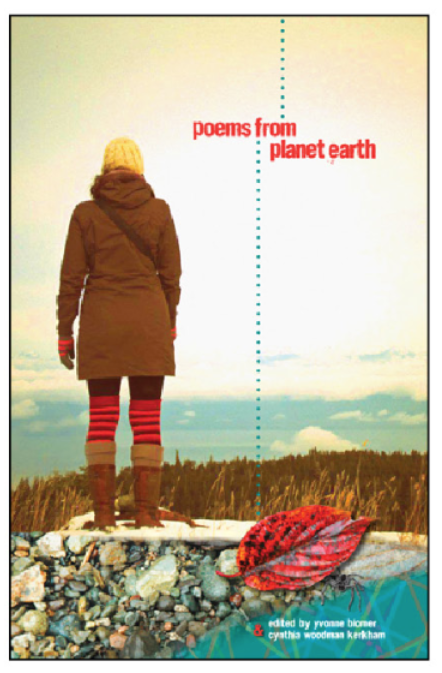
Yvonne also co-edited Poems from Planet Earth with Cynthia Woodman Kerkham, another anthology drawn from the life of the reading series. Like Mocambo Nights before it, the book preserved something otherwise fleeting: the voices, poems and atmosphere of a community gathering week after week to listen to one another.
Yvonne served as Artistic Director until 2015, when she stepped down to become the City of Victoria’s fourth Poet Laureate, leaving behind a flourishing reading series, a strong volunteer community, and a set of traditions that would continue to shape PEP for years to come.

Daniel Scott, Artistic Director from 2015-2020
Daniel G Scott, has published six volumes of poetry including Travels with Athóma (Aeolus House) & Aftertime(Ekstasis Editions). He has several chapbooks, published individual poems in collections & has numerous academic publications. Writing has saved his life more than once.
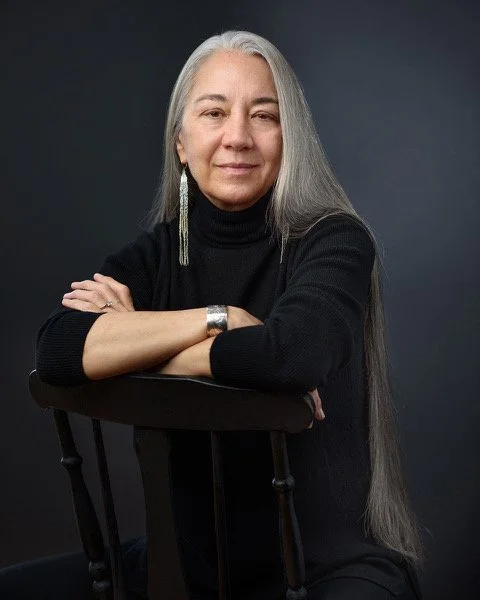
Michelle Poirier Brown, Planet Earth Poetry’s first President of the Board of Directors
Michelle Poirier Brown is an internationally published writer, performer, and feminist activist. She is nêhiýaw-iskwêw and a citizen of the Métis Nation. Her debut book of poetry, You Might be Sorry You Read This, was published in the Robert Kroetsch Series from the University of Alberta Press in Spring 2022. Also in 2022, her chapbook of poems and photographs, Intimacies, was published by Jack Pine Press.
She is the winner of a 2026 Indigenous Voices Award (Unpublished Manuscripts) and the 2025 FBCW Literary Contest prize for poetry. In 2021, she was nominated for a National Magazine Award in Personal Journalism, and in 2022, CBC Books named her as one of their Writers to Watch. The song cycle, “The Length of Day” (Jeffrey Ryan, composer), was commissioned by the Pacific Opera Victoria in 2021. Her work has also appeared in numerous literary journals and anthologies, including Arc, CV2, The Malahat Review, The Sun, and Release Any Words Stuck Inside of You.
Michelle was the first woman in Canada to win a court case establishing reasonable accommodation in the workplace for breastfeeding women. Now retired from a career as a professional writer and, later, conflict analyst and Federal Treaty Negotiator, she is giving voice to stories she has been sheltering for forty years. She continues to write about and research her Métis heritage and is currently working on a verbatim theatre piece on PTSD.
:
Daniel G. Scott at the Helm
When Daniel G. Scott became Artistic Director in 2015, Planet Earth Poetry was already a well-established part of Victoria’s literary landscape. He inherited the Friday-night readings and open mic, workshops and retreats, newsletter, and the growing community of poets and volunteers who had sustained the series through its years on Hillside Avenue.
But Daniel also inherited PEP at a difficult moment for literary reading series. Changes to Canada Council for the Arts funding meant that support PEP had previously relied upon was no longer assured. For at least one year, the series operated with little to no funding. Like many longstanding Canadian reading series, PEP was suddenly faced with the question of how to continue paying writers, presenting regular programming, and remaining accessible to the public when one of its primary sources of support had changed. Daniel kept the series going.
The funding crisis also prompted an important transformation. During Daniel’s tenure, PEP developed the more formal organizational structure it needed to survive: Planet Earth Poetry Reading Series Society (PEPRSS) was established, together with a board of directors, and PEP’s first president, poet Michelle Poirier Brown. Becoming a formal non-profit organization—and, ultimately, gaining charitable status—opened new possibilities for support beyond the Canada Council, including municipal and other community-based grants, donations, partnerships, and funding programs available specifically to non-profit organizations. What began as a weekly poetry gathering now had an organizational structure capable of supporting it for the long term.
The Poetry Bees became increasingly important during these years as well. What had begun as people pitching in grew into a committed volunteer team helping with everything from setting up the room to workshops and retreats, communications, hospitality, and the many invisible jobs required to keep a weekly literary series alive. This combination of volunteer energy and stronger organizational infrastructure became one of the reasons PEP could continue when so many reading series struggled with the same pressures.
Daniel continued the series’ commitment to featured readers, the open mic, workshops, retreats and community-building throughout these changes. His years at the helm demonstrated something that would become an important part of PEP’s story: a literary community can be remarkably resilient, but survival takes more than love of poetry. It takes people willing to do the work of keeping the doors open.
Daniel also gave Planet Earth Poetry a permanent home online. He established the PEP website with Rhonda Ganz, a poet and graphic designer, who built the site. Years later, that original website is still going strong—another piece of the infrastructure created during Daniel’s tenure that helped the series endure and grow.
Daniel’s final year brought one more major upheaval. PEP’s long-time Hillside home had already passed through several incarnations—from The Black Stilt to Moka House to Hillside Coffee and Tea—while the reading series remained rooted in the same place. In 2020, Hillside Coffee and Tea closed, and PEP lost the physical home it had occupied for more than a decade just as the COVID-19 pandemic made in-person gatherings impossible. By June, the Friday-night readings had moved onto Zoom.
Daniel served as Artistic Director until 2020, leaving Planet Earth Poetry with a stronger organizational foundation just before the series faced an entirely different kind of challenge.

Zoe Dickinson, Artistic Director from January 2021 - December 2023
Zoe Dickinson’s poetry is rooted in British Columbia’s Pacific coastline, with a focus on local ecology and human relationships with nature. She is a manager at Russell Books, one of Canada’s largest used, antiquarian, and new bookstores. Between 2020-2023, she was the Artistic Director of Planet Earth Poetry Reading Series, where she continues to volunteer as a board member. Zoe has a B.A. in Classics and Liberal Arts from Concordia University, and an MLIS from Dalhousie.
She has published two award-winning chapbooks: Public Transit (Leaf Press, 2015) and intertidal: poems from the littoral zone (Raven Chapbooks, 2022). Her work has also appeared in anthologies including Worth More Standing: Poets and Activists Pay Homage to Trees (2022), and literary journals such as Existere, Prairie Fire, and Contemporary Verse 2. Her first full-length poetry collection is Staff Picks for Invertebrates from Guernica Editions in 2026, and forthcoming is a chapbook with Pinhole Poetry.

Leanne Boschman, Co-Artistic Director with Zoe Dickinson from January 2021 - June 2021
Leanne Boschman is a Vancouver Island-based writer living and working on the traditional territories of the Cowichan Tribes and Malahat Nation. Her poetry has been published in Geist Magazine, Prism international, Other Voices, Dandelion Magazine, Room, Arc Poetry, The Tempz Review, Pulp Literature, and Grain. Her poems have also been published in several anthologies. Her debut collection Precipitous Signs: A Rain Journal (Leaf Press, 2009) explores colonial narratives of settlement and the lived experience of women in labour markets and domestic settings. Leanne’s second collection of poems is Here at the Crux (Silver Bow Publishing, 2022). Her poem “Hymns for Sad Ballads” won 1st prize in the 2022 Delta Literary Arts Society Poetry contest. As well, her poem “Most of Your Stuff is Worthless” won 1st prize in Pulp Literature’s 2023 Kingfisher Poetry Contest. She is currently working on a memoir project that combines prose, poetry, and fibre arts.
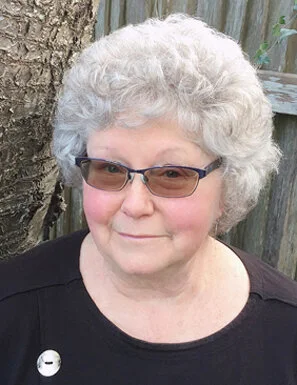
Anne Hopkinson, second President of the Board of Directors [year]
Anne Hopkinson writes of her time in Algeria, Rwanda, and the Dominican Republic, as well as nature and human nature. Her work appears in chapbooks, anthologies and journals, and has won the Victoria Writer’s Society Creative Non-fiction Contest, The Canadian Stories Poetry Prize and more. Most recently her poetry was published in Canadian Literature 2026, and Sublime: Poems for Vanishing Ice by Caitlin Press.

Poet’s Caravan: https://planetearthpoetry.com/poetscaravan
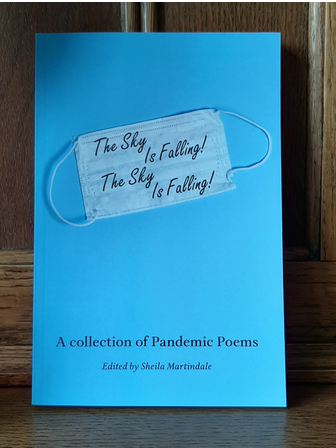
The Sky Is Falling! The Sky is Falling! edited by Sheila Martindale

The Little Free Poetry Library at Cedar Hill Recreation Center

The Unpacking the Poem series by Wendy Donawa: https://planetearthpoetry.com/unpacking
Zoe Dickinson at the Helm
When Zoe Dickinson and Leanne Boschman took over as co-Artistic Directors at the end of 2020, Planet Earth Poetry was facing a challenge unlike anything in its history. The COVID-19 pandemic had emptied the cafés, bookstores and gathering places on which literary communities depend. PEP’s readings had already moved onto Zoom earlier that year, and Zoe and Leanne inherited a series whose most fundamental tradition—people gathering together on Friday nights—could no longer happen in a room.
After Leanne stepped away, Zoe carried Planet Earth Poetry through the remainder of the pandemic, with the assistance of Anne Hopkinson, the second President of the Board of Directors. Instead of waiting for the old world to return, PEP began experimenting with what a reading series could be when its community was suddenly scattered across living rooms, cities and provinces. The online format also brought an unexpected gift: poets and audience members no longer had to be in Victoria to take part.
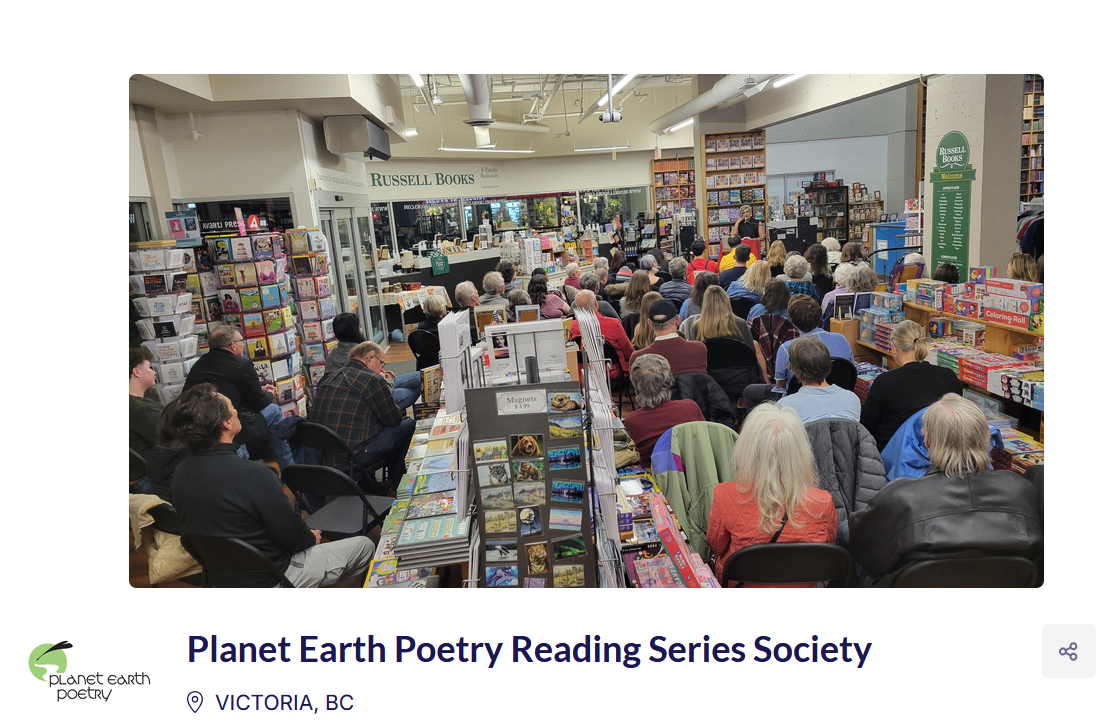
As public gatherings slowly became possible again, Zoe began the careful work of bringing Planet Earth Poetry back into a room. Because she was one of the managers at Russell Books, she was able to bring the series into a new downtown home there. Russell Books has since become one of PEP’s most important community partners, offering the space at no charge and providing thousands of dollars’ worth of in-kind hosting over the years. Their generosity gave Planet Earth Poetry a stable, welcoming home at a time when the series needed one most.
The return to live readings happened gradually, through the masked stage of the pandemic. Audiences came back in person, wearing masks and gathering carefully, while Zoe continued to keep the distance audience connected through Zoom. Rather than abandoning the online format once live readings resumed, she combined the two: poets read in person at Russell Books while audiences farther away could still watch remotely. hat in-person and livestreamed hybrid model became a lasting part of the series. It also created a growing YouTube archive of PEP readings, preserving featured poets and making the series accessible long after each Friday night had ended.
Zoe also continued offering workshops and at least one masked in-person workshop or retreat during this period, helping the community rebuild its sense of connection after months of isolation. Her work was not only about keeping the program running, but about bringing people back together slowly, safely, and deliberately.
Another important aspect of Zoe's leadership was the way she welcomed and encouraged ideas from PEP's longtime volunteers, affectionately known as the Bees. Many had been involved with the series for years, bringing their own creativity, experience, and commitment to the community. Zoe made room for their ideas to flourish, supporting projects that extended Planet Earth Poetry's reach beyond its Friday-night readings.
One such initiative was Unpacking the Poem (2022–2024), a monthly series by poet and reviewer Wendy Donawa. Through close readings of poems by regional writers, Wendy explored the craft of poetry, illuminating the choices and techniques that shape a poem and offering readers and fellow poets fresh insights into how poetry achieves its effects. These thoughtful mini-essays remain available in PEP's online archive.
The pandemic also produced another record of the PEP community. The Sky is Falling! The Sky is Falling!: A Collection of Pandemic Poems, edited by longtime volunteer Sheila Martindale, gathered poems written in response to those extraordinary months and gave the community another way to stay connected through poetry.
In [year] Little Free Poetry Library, established in collaboration with Saanich Parks, Recreation and Community Services at the Arts Centre at Cedar Hill. Located beside the gallery at Cedar Hill Recreation Centre, the library invited visitors to discover and exchange poetry books, bringing poetry into an everyday community space. The initiative also included free poetry readings by local poets, creating another welcoming point of connection between poetry and the wider community.
One of the most ambitious projects of Zoe’s tenure was the Poets Caravan, an interactive digital poetry project produced during the pandemic. Poets were professionally filmed reading in places around the Capital Regional District that held particular meaning for them, and each reading was placed on Google Earth, allowing viewers to travel from poet to poet across a virtual map of the region. The project eventually created a digital archive of 56 Vancouver Island poets—a record not only of their work, but of poetry rooted in place.
During Zoe’s tenure, PEP’s digital presence continued to grow in other ways as well. Longtime volunteer Margaret Lonsdale established Planet Earth Poetry’s Instagram account, giving the series another way to promote featured poets, share news, and stay connected with its community beyond Friday nights.
By the time Zoe stepped down at the end of 2023, Planet Earth Poetry had survived one of the most precarious periods any community arts organization could face. It had a new home, a broader digital reach, an extraordinary filmed archive, and new ways of gathering that would remain after the emergency itself had passed. Zoe had inherited a series temporarily without a room and helped bring it back into the city without losing the wider community it had discovered online.
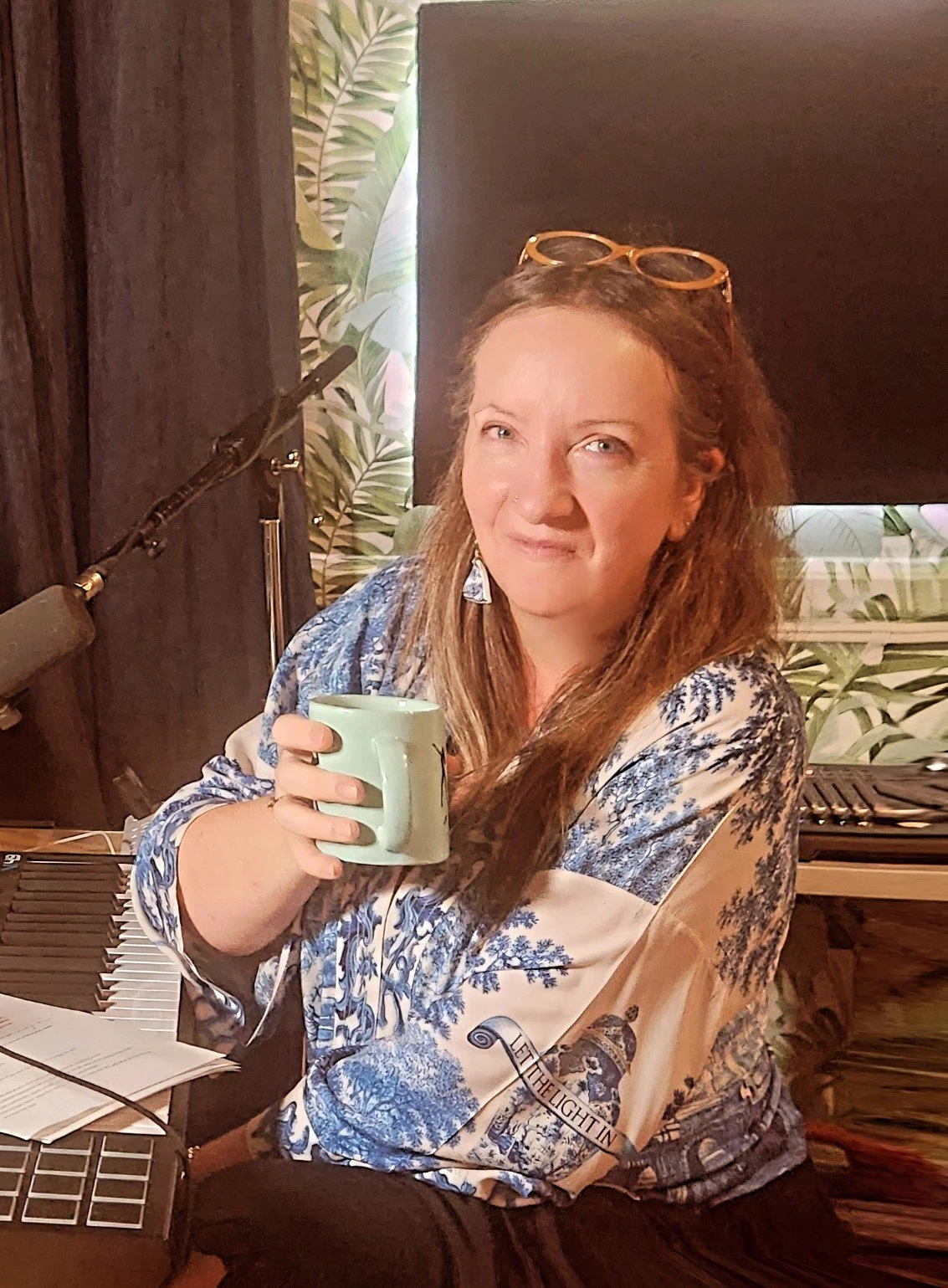
Kyeren Regehr, Artistic Director from January 2024-Dec 2026
Kyeren Regehr is Victoria’s 7th Poet Laureate. Her work includes The Poet Laureate Podcast, and the award-nominated poetry-memoir Cult Life, both supported by Canada Council for the Arts, as well as three chapbooks, including Disassembling A Dancer, winner of the Raven Chapbooks award. Kyeren’s poetry has been published internationally, thrice longlisted for the CBC poetry awards and translated into Chinese. Most recently, she won Eavesdrop Manazine’s Queer Joy contest.
Although born in Australia, she was raised as a writer in Canada—she holds an MFA in Writing, taught in the Department of Writing at the University of Victoria, and is a former poetry editor at The Malahat Review. She has mentored poets through the Writer’s Union of Canada and the League of Canadian Poets, and works as a freelance literary editor and writing mentor. Forthcoming is Pair/Pear/Pare: Canadian Poems in Dialogue, co-edited with Zoe Dickinson and forthcoming with Caitlin Press in 2027. Kyeren’s background is in the performing arts and she once found herself in the Victoria Slam Finals by accident. She lives and writes with gratitude on the homelands of the lək̓ʷəŋən peoples and the W̱SÁNEĆ peoples: həyšxʷq́̓ə siiem (thank you honorable ones). More about Kyeren here: Kyeren’s Website and The Poet Laureate Podcast

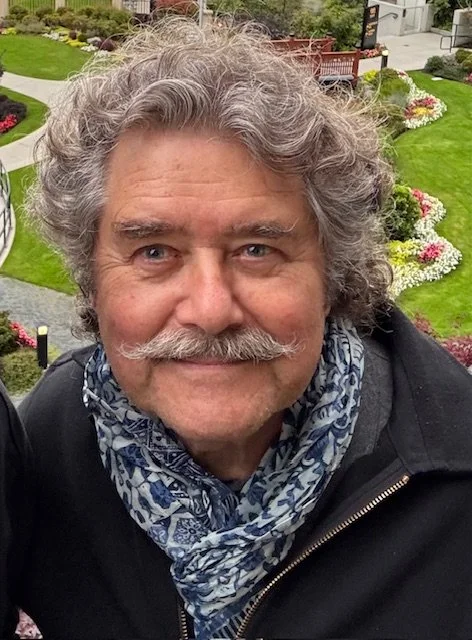
Steven Ross Smith, third president of the Board of Directors 2026 to present.
Steven Ross Smith is a poet, fiction writer, arts journalist, and arts activist. He is best known for his fluttertongue poems, which have been published in seven volumes. One of them, fluttertongue 3: disarray, won the 2005 Saskatchewan Book of the Year Award. Steven served as writer-in-residence at the Saskatoon Public Library, was Executive Director of the Sage Hill Writing Experience, and was Director of Literary Arts at the Banff Centre from 2008 to 2014. He was appointed Banff Poet Laureate in 2018.
Steven is also known for his attention to performance in poetry. He founded and performed with the Toronto-based poetry/sound/performance ensemble Owen Sound in the ‘70s and -80s, and later, in Saskatoon with DUCT, an improvisatory sound and music group. He has contributed to more than a dozen recordings including Homo Sonorous: An International Anthology of Sound Poetry released by the National Center for Contemporary Arts, Kaliningrad, Russia. He also vocalizes on Revolutions, A Compilation of Saskatchewan Sound Works, and on Carnivocal: A Celebration of Sound Poetry. Currently his rappy-spoken-word-music collaborations can be found at BandCamp.com where he appears as SloLo Smithy. https://slolosmithy.bandcamp.com. Website: Fluttertongue.ca
Kyeren Regehr at the Helm
When Kyeren Regehr became Artistic Director in 2024, Planet Earth Poetry had survived the pandemic and found a wonderful new home at Russell Books, but the literary landscape around it had changed. Audiences were still rebuilding old habits, the strong connection with UVic’s writing community had thinned, and literary organizations increasingly needed a substantial online presence to reach readers and writers beyond their immediate communities.
One of Kyeren’s early priorities was to reconnect PEP locally while extending its reach nationally. She deliberately brought UVic poets, faculty and students back into the series and expanded the pool of guest hosts, inviting poets from across Victoria’s literary community to take the microphone. Different hosts brought different voices, friendships and audiences into the room, helping the series once again become a gathering place across generations of Victoria writers.
At the same time, PEP’s digital presence grew rapidly. Kyeren substantially expanded the series’ use of social media and built relationships online with poets, publishers, reading series and literary organizations across Canada. PEP’s Instagram audience grew from roughly 140 followers to more than 1,000 within her first six months, while collaborations with other organizations helped make ambitious visiting-poet events possible. When internationally celebrated poet Kazim Ali came to Victoria, for example, PEP collaborated with Kwantlen Polytechnic University to help bring him to the West Coast. The newsletter audience also grew beyond 1,000 subscribers and was eventually reshaped into a monthly community newsletter.
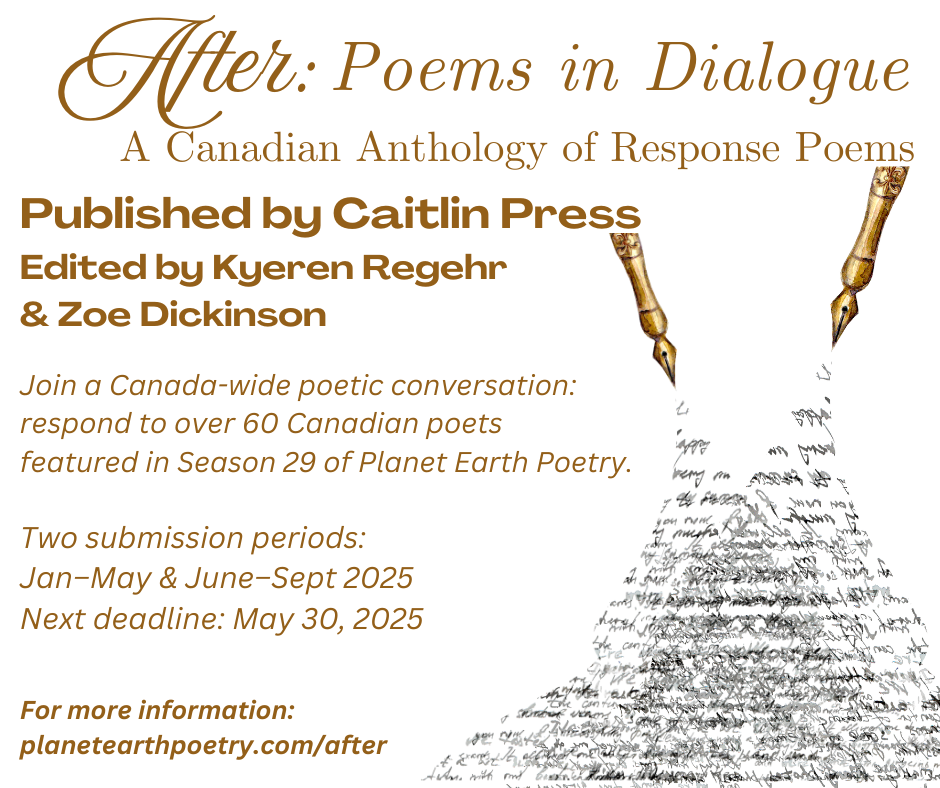
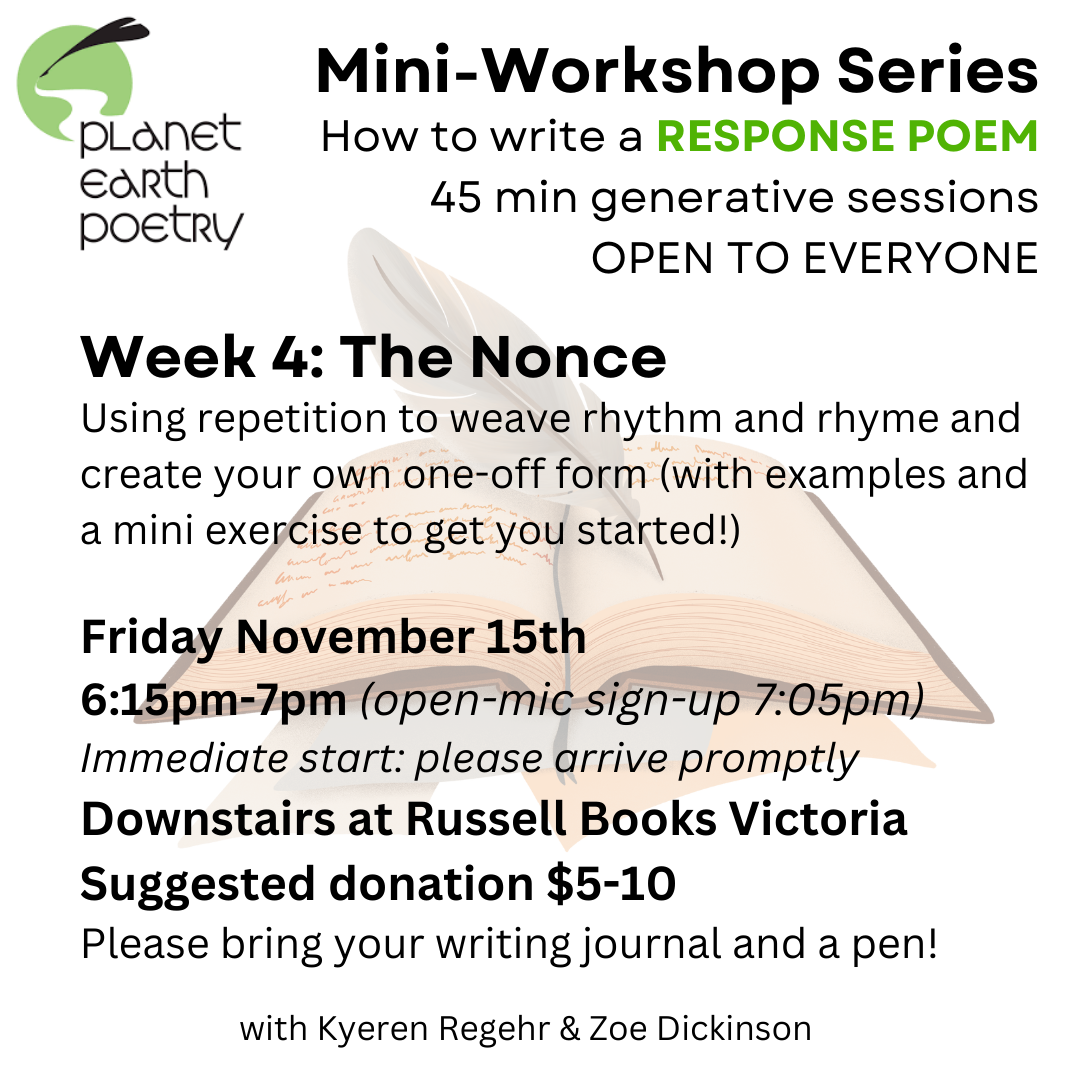
Kyeren joined former Artistic Director Zoe Dickinson to develop After: Poems in Dialogue, a national anthology of response poetry—a Canada-wide literary project, inviting poets to respond to the work of poets featured in Season 29 of Planet Earth Poetry. The project included a series of free mini workshops in person (and online) exploring the process of writing a respons poem. The final anthology will be called Pair/Pear/Pare and is forthcoming with Caitlin Press.
Kyeren attempted to include further projects and ideas from the community of volunteers, beginning with a featured reader interview series, but quickly found that PEP had grown too large too manage. After nearly three decades of accumulated programs, volunteer roles and traditions, the Artistic Director position had become too much for a single person to hold. She began streamlining PEP’s administration, clarifying responsibilities, reducing unnecessary work and distributing tasks more deliberately among volunteers. The goal was not simply efficiency, but sustainability: making it possible for an Artistic Director to lead the series without having to personally carry every part of it.
Kyeren established PEP’s internship program, creating an opportunity for emerging arts workers to learn the practical work behind a longstanding literary organization while giving the Artistic Director meaningful administrative support. Anna Cavouras became PEP’s first intern, and her ideas and assistance was so extraordinary that she remained for a second year—besides birthing the idea for the most successful fundraiser in PEP’s history, she also helped Kyeren streamline much of the AD role. Allegra Kaplan became PEP’s second intern, and immediately expanded PEP’s equity outreach, as well as bringing the work of many new poets into the programming.
During this period, PEP also deepened its work around equity, accessibility and reconciliation. Existing Indigenous workshop bursaries continued, while new practices were developed around travel support, representation and reducing barriers for visiting poets. As well as creating site-specific land acknowlegments with the assistance of BC Arts Council and local writer, Nicole Moen. The intention was not to treat reconciliation or inclusion as a single project, but as an ongoing part of how the organization makes decisions, builds relationships and welcomes writers into its community.
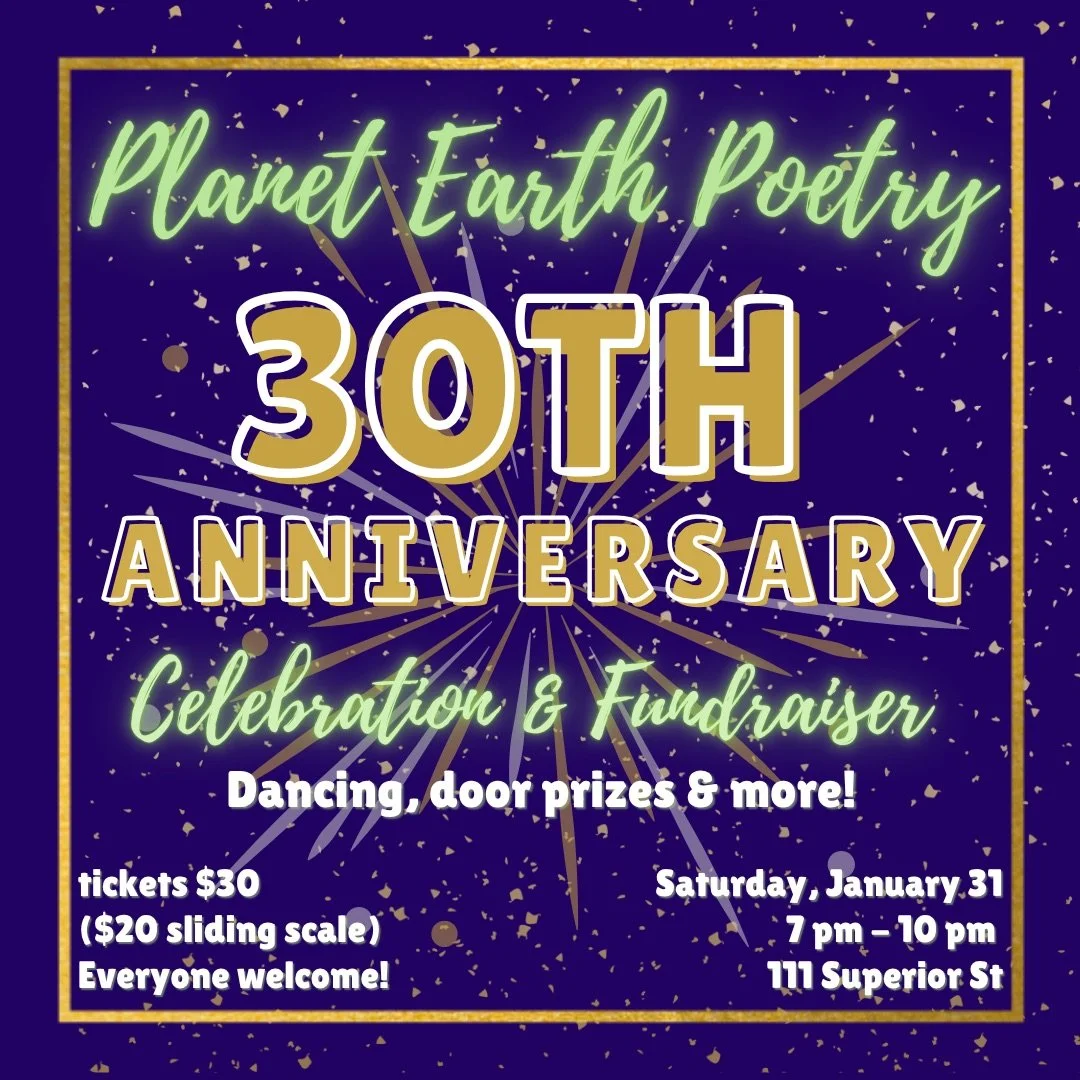
PEP’s 30th-anniversary season became both a celebration of its history and an opportunity to strengthen its future. Steven Ross Smith stepped in as PEP’s third President of the Board of Directors, and during this time, Anna Cavouras conceived the abovementioned 30 for 30 fundraising campaign. Stephen and Anna, along with Zoe Dickinson helped carry the campaign forward, inviting the community that had sustained PEP for three decades to help ensure its continuation.
Throughout these changes, the essentials remained: poets gathering every Friday, an open mic where new work could be tested aloud, featured writers from Victoria and across Canada, along with many special and collaborative events, and the extraordinary volunteer community that has always made Planet Earth Poetry possible. The work of this era was, in many ways, about making sure all of that could continue—growing PEP’s reach while making the organization itself sustainable enough to be passed on.

Anna Cavouras, Co-Artistic Director Jan 2027-
Anna Cavouras finds stories everywhere. Her multi-genre published work has been short and long-listed and can be found in anthologies, journals, and magazines, including Five Min Lit, Studio Magazine, Boneyard Soup, Island Writer and with the League of Canadian Poets. She is a former book reviewer with the Fat Joy Podcast, a past writer-in-residence with Firefly Creative Writing and a graduate of The Writer’s Studio at SFU. Her writing is informed by her life as a crone-in-training who always carries her queer feminist agenda.
Prior to her writing life, Anna was a community food justice organizer in Vancouver’s Downtown Eastside and the founder of the DTES Research Access Portal. As incoming co-Artistic Director, Anna is honoured to be part of the next chapter of Planet Earth Poetry. From chapbook launches to special events and all the featured readings in between, Anna is excited at the opportunity to celebrate and uplift poetry through the curation of a wide range of new and established writers.
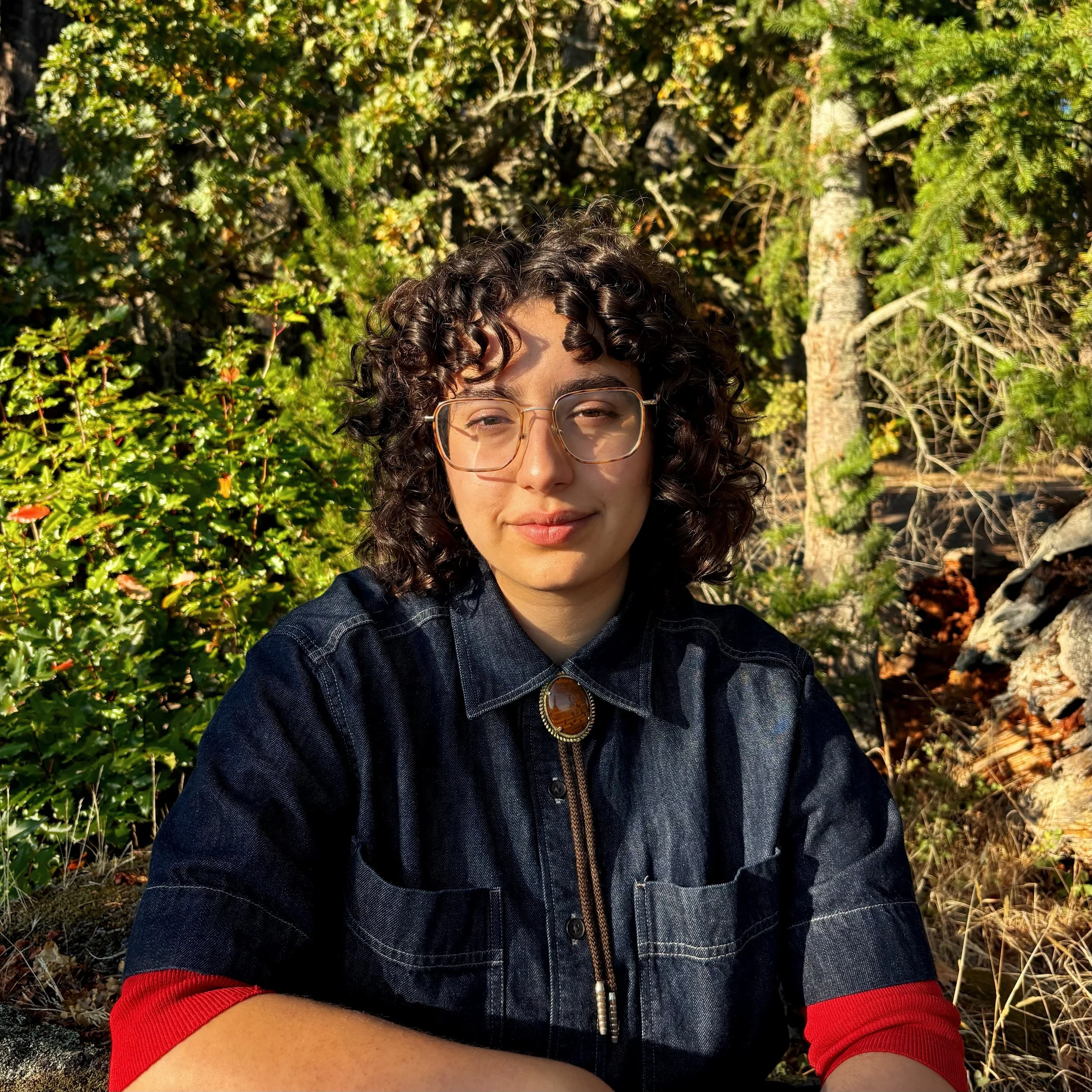
Allegra Kaplan, Co-Artistic Director Jan 2027-
Allegra Kaplan is a queer poet living on unceded lək̓ʷəŋən territory. Her poetry is published in Grain, Room, yolk, Beaver Magazine, LBRNTH, MEASURE, The Fieldstone Review, Ahoy Literary, Eavesdrop Magazine’s Our Queer Histories anthology, and elsewhere. Her reviews and critical work have been published in The Albatross Review, Currents in Teaching and Learning, IDEAH, KULA, and The Malahat Review.
Allegra holds an MA in English Literature from UBC, where her SSHRC-funded research engaged critically with contemporary Canadian poetry and poetics. She has served as Poetry Editor for The Warren Review, on the poetry editorial board of PRISM international, and most recently as Associate Poetry Editor for yolk. Her chapbook, FOUND IT WANTING, is forthcoming from Deuteragonist Press in late 2026. She is delighted to be stepping into the role of co-Artistic Director at Planet Earth Poetry, and she looks forward to giving back to this poetry community that has meant so much to her through fostering bold, meaningful literary experiences in the seasons to come.
ANNA CAVOURAS & ALLEGRA KAPLAN AT THE HELM AS CO-ARTISTIC DIRECTORS
In January 2027, Anna Cavouras and Allegra Kaplan will step into the role of Co-Artistic Directors of Planet Earth Poetry, steering the series into a new era.

COMMUNITY: something about the extensive transformation of open mic poet to published poet, anecdotes, photos testimonials?